Demographic and Social Statistics
Gender Statistics
About the Global Gender Statistics Programme
The Global Gender Statistics Programme is mandated by the United Nations Statistical Commission, implemented by the United Nations Statistics Division (UNSD) and coordinated by the Inter-Agency and Expert Group on Gender Statistics IAEG-GS.
The Programme encompasses:
- improving coherence among existing initiatives on gender statistics through international coordination
- developing and promoting methodological guidelines in existing domains as well as in emerging areas of gender concern
- strengthening national statistical and technical capacity for the production, dissemination and use of gender relevant data
- facilitating access to gender relevant data and metadata through a newly developed data portal.
UNSD serves as Secretariat of the Inter-Agency and Expert Group on Gender Statistics (IAEG-GS), the coordinating and guiding body of the Global Gender Statistics Programme. The IAEG-GS was first convened in 2006, meets annually and functions through advisory groups. Presently, the main advisory group's work concentrates on examining emerging and unaddressed key gender issues and related data gap with the aim to develop proposals on how to fill these gaps.
This website serves as a platform for the dissemination of developments in the field of gender statistics and promotes the inclusion of gender statistics into all fields of statistical activities at both the national and international levels.
STATISTICAL COMMISSION PAPERS
- Gender Statistics: report of the Secretary General - 2024
- Gender Statistics: report of the Secretary General - 2022
- Gender Statistics: report of the Secretary General - 2020
- Gender Statistics: report of the Secretary General - 2018
- Social Statistics: report of the Secretary General - 2017
- Gender Statistics: report of the Secretary General - 2016
- Gender Statistics: report of the Secretary General - 2015
- Gender Statistics: report of the Secretary General - 2014
- Gender Statistics: report of the Secretary General - 2013
- Gender Statistics: report of the Secretary General - 2012
- Global Gender Statistics Programme: report of the Secretary General - 2011
- Report of the Ghana Statistical Service on Gender Statistics - 2011
The Inter-Agency and Expert Group on Gender Statistics (IAEG-GS)
Recognition of the centrality of gender equality to social and economic development has led to an increase in the demand for gender statistics and indicators for monitoring and planning. Although considerable effort and resources have been invested towards the development of gender statistics worldwide, significant gaps remain. In particular, there are still many critical areas of concern for gender equality for which little or no gender statistics exist. Moreover, while many activities are being conducted towards improving gender statistics, their regular production and use have yet to be institutionalized at the national, regional and global levels.
In order to address the need for advancing the development of gender statistics, the United Nations Statistics Division, in collaboration with the United Nations Population Fund (UNFPA) and the World Bank, convened an Inter-Agency and Expert Group on Gender Statistics (IAEG-GS). The group met for the first time in New York, from 12-14 December 2006 to take stock and assess potential strategies to improve gender statistics at the national and global levels.
The IAEG-GS brings together representatives of international agencies within and outside United Nations system, statisticians from National Statistical Systems, and development partners, to review progress and provide guidance on future activities geared at advancing gender statistics. The UN Statistics Division is the secretariat of the group, while the chairmanship is held by a country member of the IAEG, on a rotational basis. The IAEG-GS has the main purpose of advancing gender statistics at the global level through monitoring progress, addressing challenges and gaps, planning future work and establishing good practices. Its work is based on the recognition that enhancing national statistical systems' capacity to develop gender statistics is key to addressing gender equality and promoting women's empowerment.
Terms of Reference (as of October 2013)
Addendum Terms of Reference (as of February 2020)
List of gender-relevant SDG indicators by the IAEG-GS (as of November 2021)
 (Members login here)
Members
- Brazil
- Canada
- Colombia
- Finland
- Georgia
- Ghana
- India
- Italy
- Japan
- Jordan
- Kazakhstan
- Mexico
- Moldova
- Morocco
- Philippines
- South Africa (Co-Chair)
- Switzerland (Co-Chair)
- Uganda
- United States
- Viet Nam
- Zimbabwe
Methods
- International Classification of Activities for Time-Use Statistics 2016 (ICATUS 2016)
- Guidelines for Producing Statistics on Asset Ownership from a Gender Perspective
- Integrating a gender perspective into statistics [ wiki, pdf ]
- Guidelines on producing statistics on violence against women: statistical surveys [ English, Chinese, Russian ]
- Gender Statistics Handbooks
The United Nations Statistics Division is committed to supporting countries in the production, analysis and use of gender statistics. The Division is Secretarial of the Inter-Agency and Expert Group on Gender Statistics (IAEG-GS), the coordinating and guiding body of the Global Gender Statistics Programme.
E-mail: genderstat@un.org
Data
The World's Women reports
The World's Women reports are prepared by the Statistics Division of the UN Department for Economic and Social Affairs (UN DESA) at five-year intervals, starting in 1990. Seven reports have been published as part of the The World's Women series.
2020 Edition available!
The World's Women 2020: Trends and Statistics compiles 100 data stories that provide a snapshot of the state of gender equality worldwide. Presented on an interactive portal, the report analyses gender equality in six critical areas: population and families; health; education; economic empowerment and asset ownership; power and decision-making; and violence against women and the girl child as well as the impact of COVID-19.
- WW2020 gender data portal
- WW2020 (.pdf)
- Executive summary
- Press release
- Infographics
- 5 things to know about Gender Equality (video)



Evidence and Data for Gender Equality (EDGE)
The Evidence and Data for Gender Equality (EDGE) project is a joint initiative of the United Nations Statistics Division and UN Women that seeks to improve the integration of gender issues into the regular production of official statistics for better, evidence-based policies.
eLearning
-
Regional Commissions
- ECA - Gender statistics toolkit
- ECE - Gender statistics toolkit
- ESCWA - Gender Statistics E-Learning Course (Arabic)
-
Agencies
- FAO - SDG Indicator 5.a.1
Global Forum on Gender Statistics
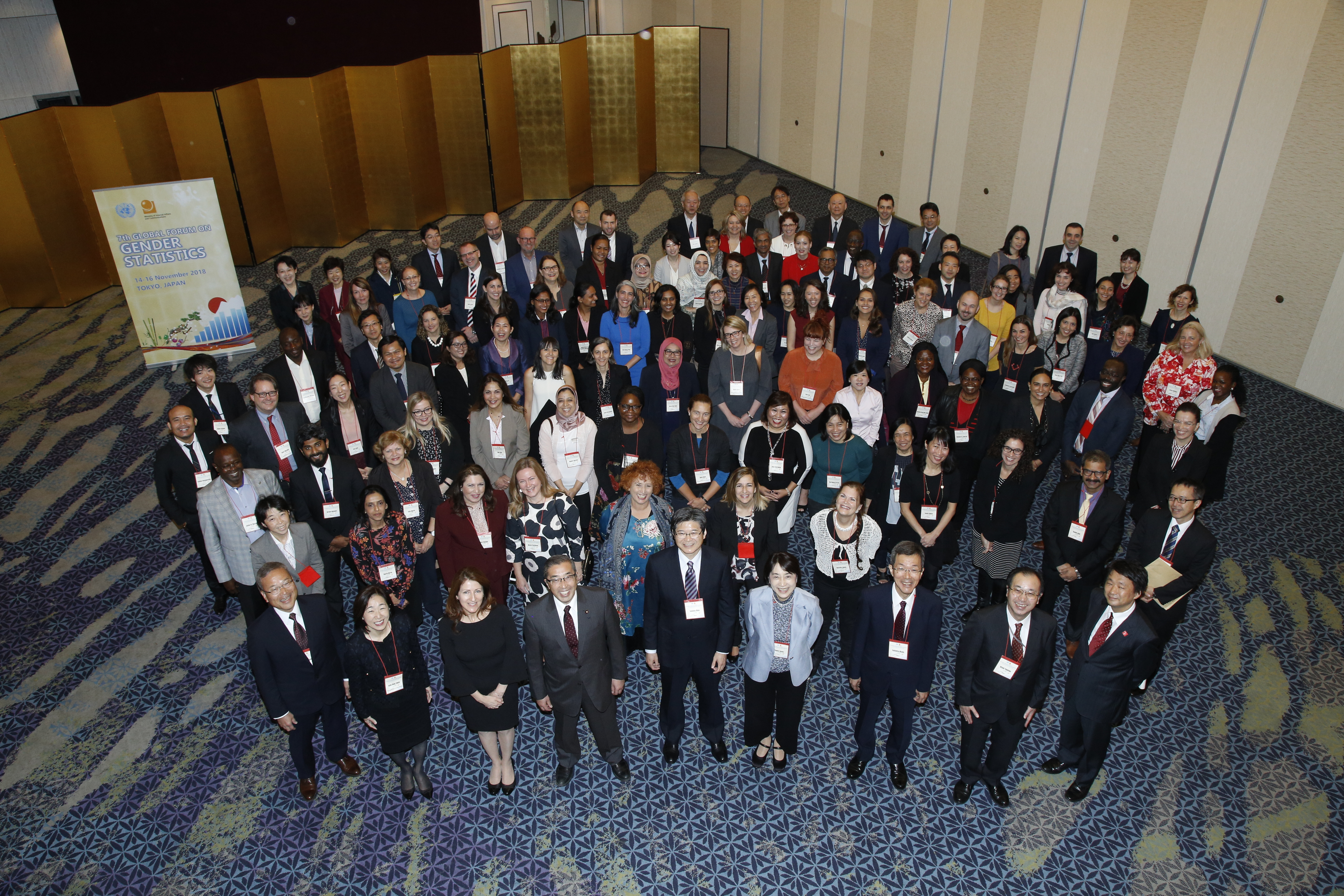
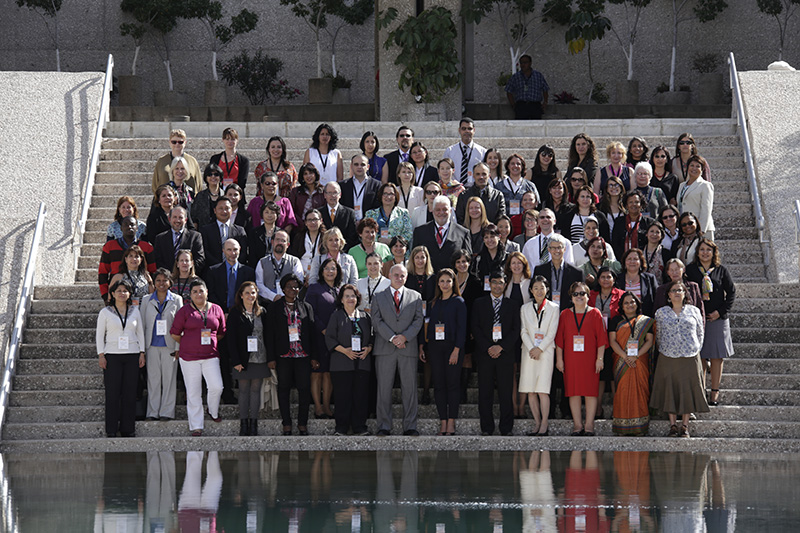
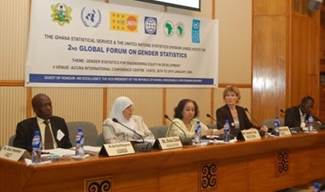
Global Forum on Gender Statistics brings together producers and users of gender statistics from national and international statistical offices, other government agencies, international organizations, academia, civil society, private sector and the donor community. Held every two years since 2007, it is an opportunity to discuss ways to improve data and evidence for gender policies, in line with the 2030 Agenda for Sustainable Development.
The United Nations Statistics Division (UNSD), in collaboration with Statistics South Africa, held the 9th Global Forum on Gender Statistics in Johannesburg, South Africa from 29 to 31 August 2023. The Forum was an opportunity:
- to discuss ways to improve data and evidence on the growing challenges and opportunities offered by the care economy and its impact on gender equality;
- to strategize on how to make the best out of existing data, including by mainstreaming a gender lens into existing data processes; and
- to take stock and learn of good practices in gender statistics and data management from the African region.
Please visit the forum website to learn more.
Previous forums