





Quick Links
Database
Events and Workshops
 Upcoming Event
Regional Workshop on Integrating Business and Trade Statistics
The workshop aims to raise awareness on the needs and usefulness of linking business and trade statistics, and build capacities in linking methods for integrating business statistics with international trade statistics on goods and services
 Recent Event
International Workshop on Updated Recommendations in the Trade Statistics Manuals - IMTS 2026 and MSITS 2026
This workshop is aimed at preparing for the implementation of the updated trade statistics manuals (IMTS 2026 and MSITS 2026) and the Handbook on Integrating Business and Trade Statistics (HIBTS). The revised trade manuals are expected to be completed by the end of this year and submitted to the United Nations Statistical Commission for consideration in 2026.
 Recent Event
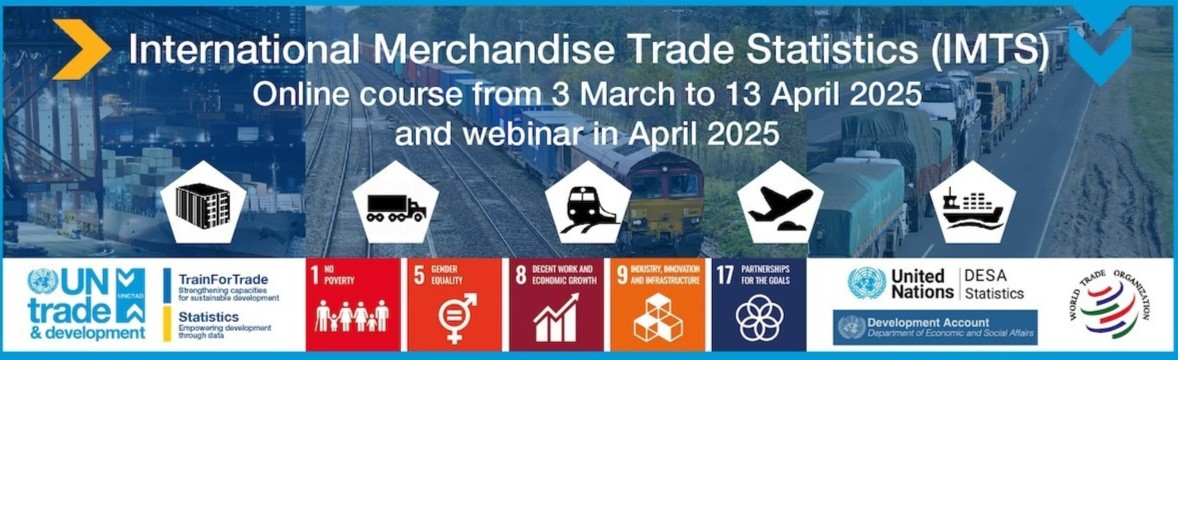
TrainForTrade E-Learning Course on International Merchandise Trade Statistics
The main goals of the course are to enhance statisticians' ability to apply the most recent internationally agreed recommendations on IMTS, define best possible data sources, set up adequate (or enforce existing) collection systems, and enhance statistics compilation and production processes.
 Recent Event
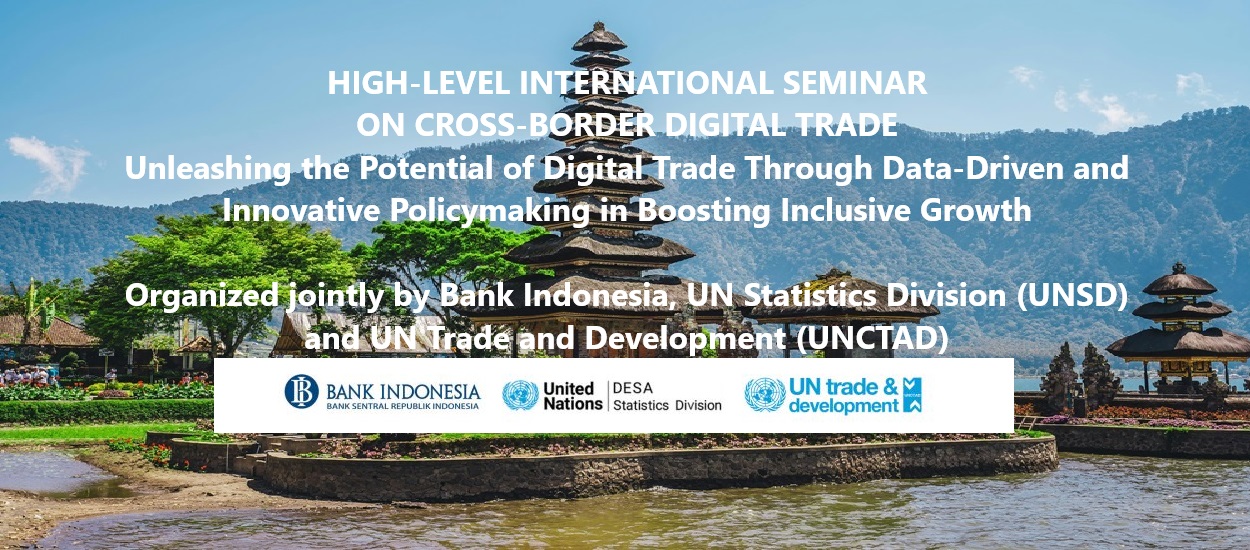
High-Level International Seminar on Cross-Border Digital Trade
The international high-level seminar aims to help policymakers, statisticians, academics, and others understand the increasing trend of cross-border digital trade. The discussion will focus on policy issues, opportunities, and challenges related to digital trade. It will also address the participation of SMEs and individuals/households in utilizing digitalization to boost economic growth and explore innovative methodologies for collecting cross-border digital trade statistics. It targets a diverse audience of approximately 100 in-person participants, including central bank representatives, government officials, statistics compilers, academics, and private sector members.
Publications
International Merchandise Trade Statistics: Concepts and Definitions 2010 (IMTS2010)
International Merchandise Trade Statistics: Concepts and Definitions 2010 (IMTS2010) is intended to provide recommendations that are globally applicable and operational. The conceptual framework of IMTS 2010 reflects both the multipurpose nature of these statistics and concern for availability of the adequate data sources and data-compilation procedures. IMTS 2010 follows an integrated approach to economic statistics, including the use, as applicable,of common concepts, definitions, classifications and data-compilation strategies.
IMTS2010 Compilers Manual
The IMTS2010 Compilers Manual contains detailed explanation of certain recommendations and provides practical guidance for compilers by describing good or best practices applicable under different circumstances. The Manual promotes the adherence to good practices and recommends specific solutions to compilation issues related to international merchandise trade statistics.
Manual on Statistics of International Trade in Services 2010 (MSITS 2010)
The Manual on Statistics of International Trade in Services 2010 (MSITS 2010) addresses the needs of a variety of producers and users of such statistics. While it is primarily a guide for statistical compilers, it is also a useful tool for governments and international organizations that use statistical information in connection with international negotiations on trade in services. Furthermore, it can aid enterprises and others that need to monitor developments in international services markets.
Compilers Guide for the Manual on International Trade in Services 2010
The Compilers Guide serves the purpose of harmonizing and improving the ways in which statisticians at the national level collect, compile and disseminate trade in services statistics. The Guide provides the international statistical community with guidelines, best practices, case studies, and practical advice on the compilation of the trade in services statistics.